


The world of e-commerce and digital strategies evolves rapidly. This blog may contain insights that have since been surpassed by new developments. Curious about the latest trends and fresh perspectives? Dive into our most current articles on Insights.
Your most important category is climbing the Google rankings. Organic clicks are increasing. Yet the commercial return is falling short. Meanwhile, your brand appears in an AI answer, but the recommended product barely fits the prompt. The dashboard looks encouraging. Whether you are actually helping your website visitors make a choice is less clear.
That gap deserves more attention. Rankings, traffic and mentions show that you are visible. Each tells part of the story. But sustainable growth also requires an understanding of the need behind that visibility, the trust you build and what someone can do next.
At Yellowgrape, our Organic Growth approach therefore considers the entire customer journey: from market demand and discoverability to the information and experience your online store or platform provides. Being found is the beginning. Being chosen is growth.
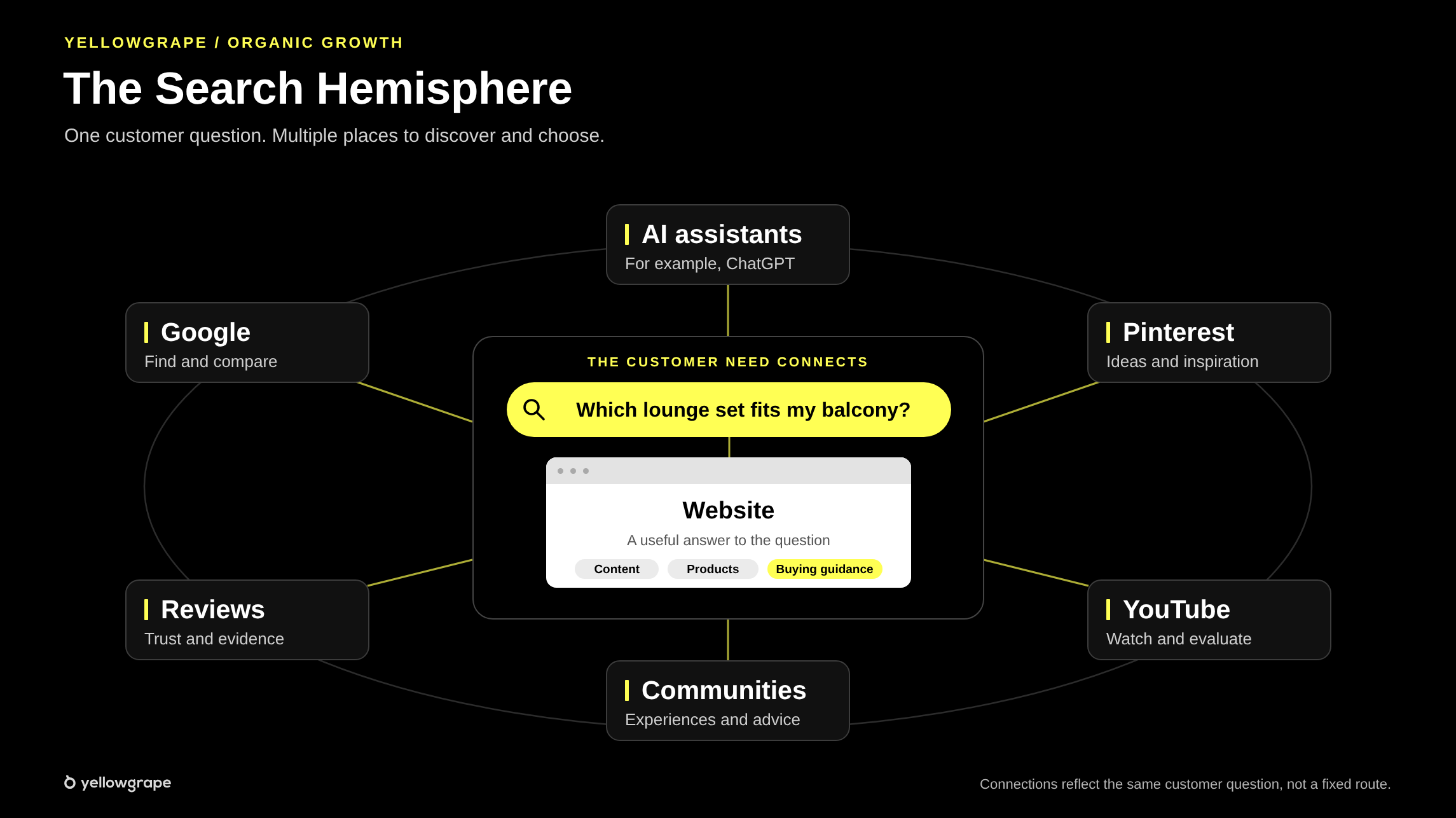
Consider a familiar scenario: someone is looking for an outdoor lounge set for a small balcony. On Google, the search might start with dimensions and prices. On Pinterest, the same person looks for inspiration: lounge sets that suit the balcony's style and limited space. A YouTube video shows how easily the set can be stored away. In a community, they look for other users' experiences: is the set comfortable, and how does the material hold up through the winter months?
An AI assistant can then help them weigh up the options: what fits on a narrow balcony, needs little maintenance and stays within budget? The underlying need remains largely the same. How people express that need and gather evidence varies across platforms. This is an illustrative journey; people do not follow a fixed route through these platforms.
We call this wider landscape the Search Hemisphere. Search engines, AI assistants, visual platforms, video and communities provide different entry points into a customer journey. The website brings together product information, deeper guidance and the decision itself, while people also form their impression of your brand elsewhere.
This calls for choices. A useful size guide belongs on your product page. A clear demonstration works well in video. Your own sales copy cannot replace an independent account of someone's experience in a community. You do not need to be equally active everywhere, but you do need to understand which questions your audience asks, and where.
AI Search is part of the same challenge. According to Google Search Central, existing SEO principles remain relevant for Google's AI Overviews and AI Mode. There are no additional technical requirements to appear as a supporting link. AI Search therefore does not require a separate approach alongside SEO. You do, however, need to understand the question being asked on each platform.
SEO remains essential. A website that is difficult to access, has unclear categories or presents conflicting product information makes life unnecessarily difficult for both people and systems. In our approach, we call this foundation Hygiene. Hygiene means an accessible, understandable and reliable digital environment. It covers technical setup, indexability, architecture and structured data, among other things. That structured data must match what visitors actually see.
A strong foundation does not, on its own, tell you which needs to address. That is where Demand Architecture begins. Search volumes are useful, but customer service enquiries, internal searches and product reviews can also reveal where people get stuck. For the balcony set, maintenance might prove more important than the frequently used term 'luxury'. That insight shapes the information you create, the way you organise your categories and the products you bring to the fore.
Understanding demand also means deciding which demand deserves less attention. High search volume offers little value if your range barely meets the need or your margins leave no room for growth. A smaller category may be more attractive when you have a compelling offer and relevant expertise. This creates a roadmap that reflects commercial opportunities, rather than a content calendar built around the highest-volume keywords.
Relevance then provides an appropriate answer to that demand. Someone who wants to know whether a set will fit gains little from a long introduction about enjoying the summer. They need dimensions, useful photos and an explanation of the space required to sit comfortably. Good content makes the decision easier and helps them move towards a suitable solution.
Authority & Brand plays a crucial role here. Why should someone believe your explanation? Demonstrable expertise, practical product guidance, relevant external mentions and independent reviews help people assess your claims. Trust also requires honesty about limitations. After all, a low-maintenance product is not necessarily suitable for leaving outdoors, unprotected, all winter.
Experience & Conversion brings everything together when someone is ready to choose. Think intuitive filters, comparable specifications and clear information about delivery and returns. This is where Organic and UX go hand in hand.
Suppose the balcony set is now easy to find, but temporarily unavailable. The visitor reaches the right product page and sees only 'out of stock'. In an organic acquisition report, the click has been recorded. For the person visiting your online store, this is where the problem begins.
A relevant next step can retain the interest you have built. Do you know when the set is expected back in stock? Show that expected restock date. Offer a stock notification when waiting makes sense. And present alternatives that meet the same need: similar dimensions, suitable materials and an appropriate price point. A random bestseller rarely makes a convincing alternative.
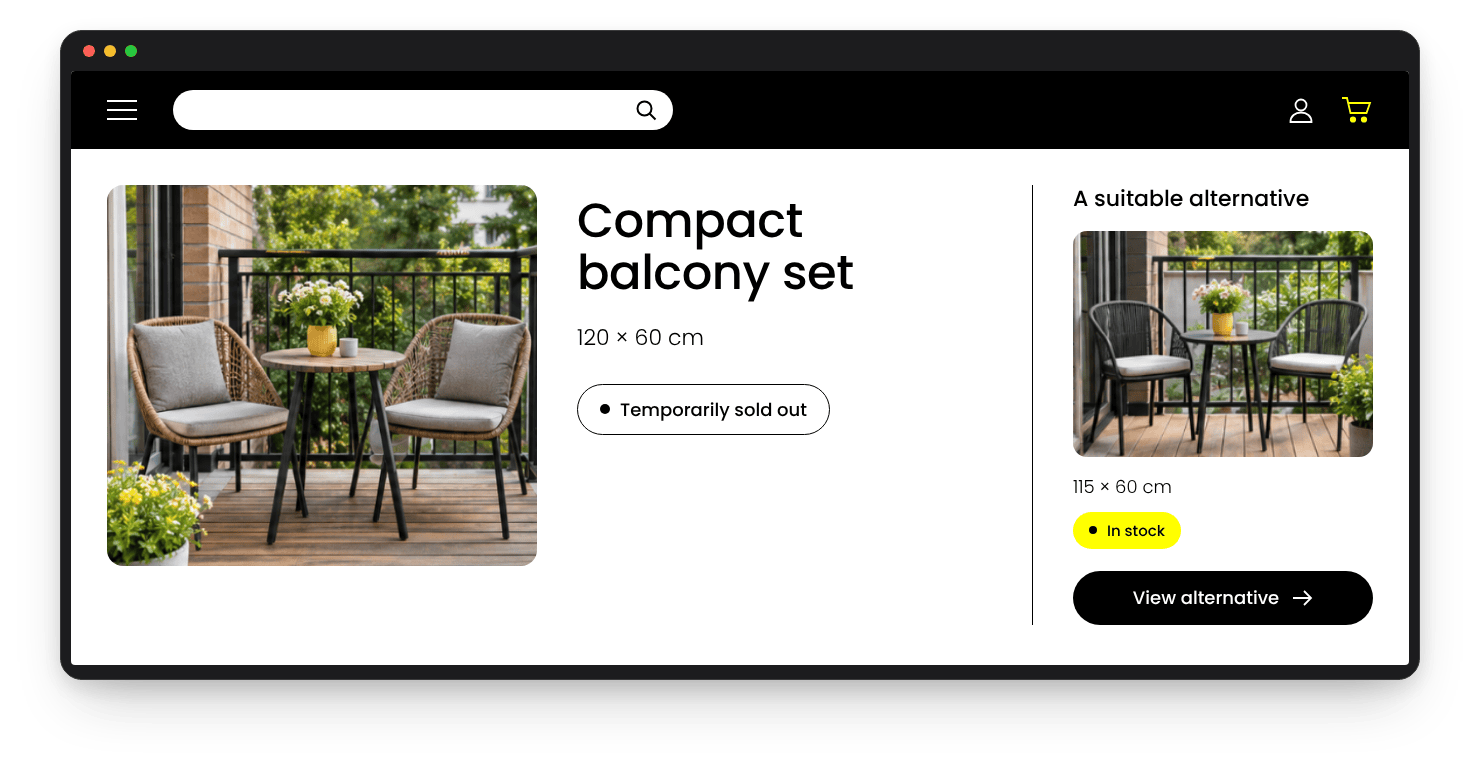
For this to work, product data, stock status, internal links and presentation must align seamlessly. An alternative that appears to be in stock in a carousel, but turns out to be sold out when someone clicks through, adds to the frustration. In some cases, it can cause lasting damage to the brand. The information supplied to different search platforms must also reflect the current situation on the website.
Check whether better alternatives deliver more value. Look at clicks through to replacement products, purchases and margin, for example. Also check whether you are actually helping people. A higher conversion rate for an unsuitable product may lead to more returns.
Apply the same scrutiny beyond your online store. Suppose an AI assistant mentions your brand in response to the balcony question. A visibility tool records a mention. But the answer recommends a large corner set that could never fit on the balcony. Your brand is visible, but it is not being presented as a useful choice.
So distinguish between a mention, a source citation and an actual recommendation. A citation might simply support advice about materials. A recommendation might be relevant to an entirely different audience. Always look at the full context. Which question is being answered, which attributes are associated with your brand, and is the product information correct? Context is king.
That also changes what you improve. Sometimes a clear product specification is missing. Sometimes a claim needs independent evidence. Sometimes your offer simply does not fit the question. More content or more brand mentions will not automatically solve this. The aim is for information about your brand to be accurate and to help people make a good decision: one that suits their needs.
Rankings, impressions and organic clicks remain valuable signals. They help you identify opportunities and problems. To connect them with business value, we consistently ask four questions.
Presence: where do we appear? Look at search results, video, relevant communities and AI answers. For AI, record whether it is a mention, source citation or recommendation. A measurement captures what you observe at that moment, rather than what every user sees.
Coverage: which relevant customer needs do we address? Examine which needs, categories, products and markets are well represented. A strong presence around general inspiration can coexist with gaps in the questions people use to make a purchase decision. An average visibility score can easily hide that difference.
Response: what do people do next? Consider visits, product comparisons, relevant interactions and qualified enquiries. Assess those responses in context. A short session may mean someone found the answer immediately, while a high number of clicks may indicate difficult navigation.
Value: what commercial contribution can we see? Where possible, connect those patterns with conversion, revenue, margin, returns and customer value. For a B2B service, relevant enquiries and their eventual quality may matter more than visitor numbers.
These questions do not make it possible to trace every impression through to an order. They primarily help you assess an improvement at the right level. More reach in a new category needs a different interpretation from more purchases in an existing one. Agree in advance which outcome matters, and compare the same markets, product groups and periods. Otherwise, it is all too easy to attribute a change in the mix to the optimisation itself.
Data still has its limits. Google provides dedicated reporting on impressions in generative search features. This helps you track your brand's or online store's presence in AI Search more closely. It does not establish that an impression contributed to a later purchase. Nor does a branded search after an AI answer automatically reveal where that interest began.
Combine this data with behavioural evidence, commercial figures and focused research. When tracking AI answers, use a consistent set of questions and record the platform, language and time of measurement. Results can vary depending on how and when a question is asked. Treat a sample like this as an indication, rather than a complete map of the market.
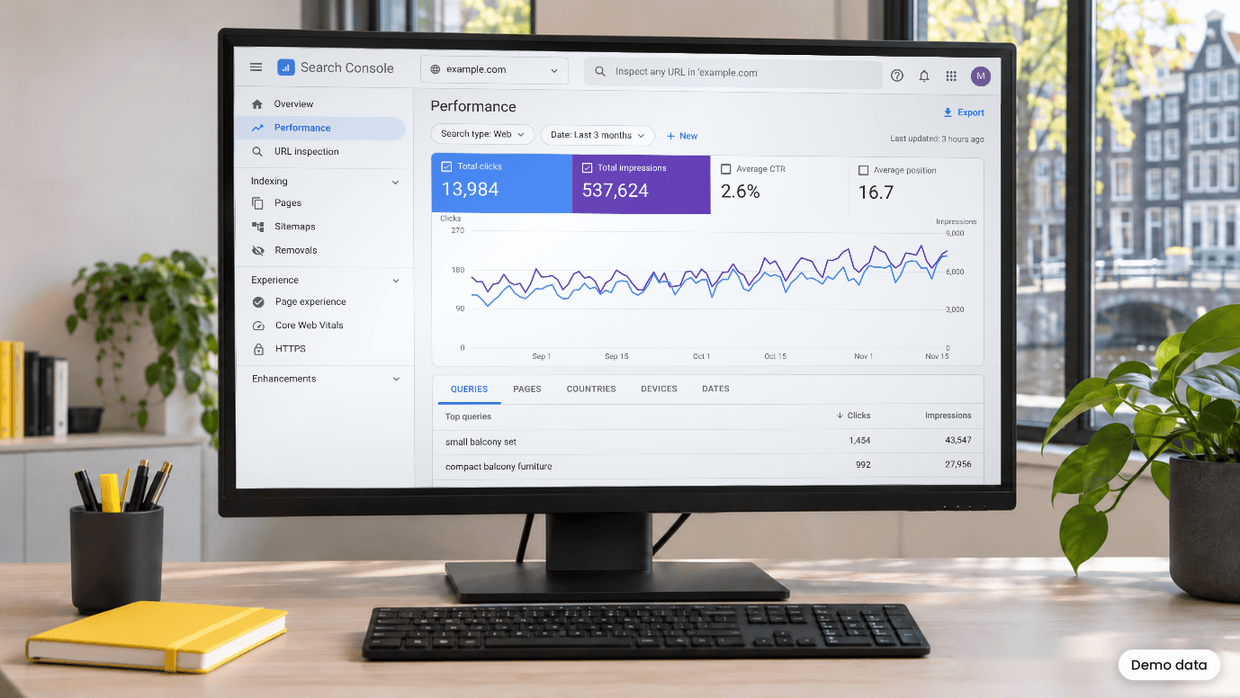
Growth Intelligence uses insight to guide decisions. Start with a specific hypothesis. For example: visitors to out-of-stock products are not finding enough suitable alternatives. Decide in advance which behaviour needs to change and what commercial outcome should follow. Improve a defined group of pages and, where possible, compare it with a similar group that has not been changed.
Even then, interpretation requires discipline. Stock levels, seasonality, promotions and changes in the visitor mix can affect the result. A comparison can provide stronger evidence than a rising line alone, without removing every uncertainty. Automation can then help you carry out recurring checks and apply proven improvements at scale. Deciding what to prioritise still requires informed judgement.
This is how the elements reinforce one another. An understanding of demand guides relevance. Better product information supports discoverability and the eventual choice. Trust helps visitors weigh up that information. Measurement reveals which intervention is worth trying next. The best priority may therefore be an inventory integration, even while ten new articles are still on the content calendar.
This has implications for collaboration. An SEO specialist may identify the problem, but will probably also need merchandising and development to provide up-to-date stock information. Credible product guidance requires subject expertise. Better comparisons need UX input too. Organic growth therefore calls for shared responsibilities and clear priorities. When teams are judged solely on traffic without taking joint responsibility for what happens next, marketing results and business results can diverge.
Start with one commercial question: where are we losing people who already have a relevant need? Follow that question from discovery to decision. It leads to a more concrete conversation than asking how to become more visible everywhere.
Explore our Organic Growth approach.


